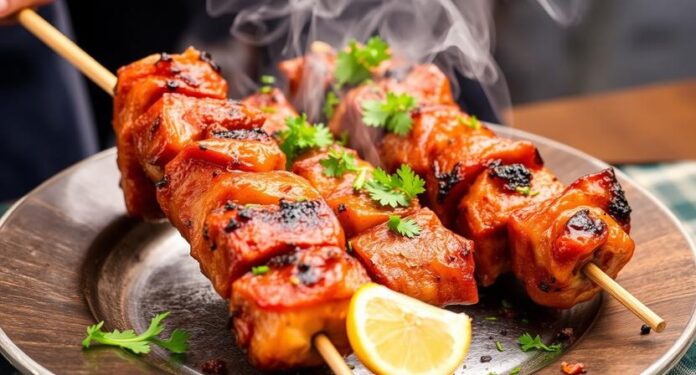


Kebab is one of the world’s most recognised grilled meat dishes, enjoyed across the Middle East, Central Asia, Europe, and beyond. When people search for en kebab, they are typically looking for information about kebab in English, including its meaning, origins, preparation methods, and cultural significance. From traditional skewered meat to modern street-food versions, kebab has become a favourite meal for millions worldwide.
Whether served in warm flatbread, alongside rice, or on a skewer fresh from the grill, kebab combines simple ingredients with bold flavours. Its versatility and rich history have helped it remain a staple of many cuisines for centuries.
Quick Facts About En Kebab
| Feature | Details |
|---|---|
| Name | En Kebab (Kebab in English) |
| Type | Grilled meat dish |
| Origin | Middle East and Central Asia |
| Main Ingredients | Meat, spices, vegetables, bread or rice |
| Common Meats | Lamb, beef, chicken |
| Cooking Method | Grilling, roasting, or spit-cooking |
| Popular Variations | Döner kebab, shish kebab, adana kebab, shawarma |
| Served With | Flatbread, salad, rice, sauces |
| Global Popularity | Europe, Asia, North America, Middle East |
| Key Feature | Flavourful marinated meat cooked over heat |
What Is En Kebab?
En kebab refers to the English understanding of kebab, a broad category of grilled or roasted meat dishes originating in the Middle East and Central Asia. Traditionally, kebab consists of small pieces of seasoned meat cooked over an open flame, often on skewers. The word itself comes from Persian and Turkish culinary traditions and has spread worldwide through migration, trade, and cultural exchange.
Today, the term kebab can describe several different dishes. In some countries, it refers to skewered meat grilled over charcoal, while in others it commonly means slices of roasted meat served in flatbread with vegetables and sauce. The exact definition often depends on regional food culture.
What makes kebab unique is its adaptability. Different cultures have developed their own recipes, seasonings, and serving styles while preserving the core concept of flavourful meat cooked using direct heat.
Why En Kebab Matters
Food often tells the story of culture, and kebab is a perfect example. For centuries, kebab has been a central part of Middle Eastern and Central Asian cuisine. Nomadic communities found that grilling meat over open fires was both practical and delicious, leading to the development of numerous kebab styles.
As populations moved across regions, kebab travelled with them. Today, it is sold in street-food stalls, family restaurants, and fine-dining establishments across the globe. In the United Kingdom, kebab has become a familiar takeaway meal, particularly in urban areas where Turkish, Middle Eastern, and Mediterranean cuisines are widely available.
Furthermore, kebab represents culinary diversity. Its many variations demonstrate how a simple cooking method can evolve while remaining rooted in tradition.
Key Features of En Kebab
High-Quality Meat Preparation
One defining feature of kebab is the use of carefully prepared meat. Lamb has traditionally been the preferred choice, although beef, chicken, and other meats are also commonly used. The meat is often marinated before cooking to enhance flavour and tenderness.
Marinades may include ingredients such as olive oil, garlic, lemon juice, yoghurt, paprika, cumin, and various herbs.
Distinctive Cooking Methods
Kebabs are known for their grilling techniques. Traditional shish kebabs are cooked on skewers over charcoal, creating a smoky flavour. Other varieties, such as döner kebab, are prepared on vertical rotating spits where layers of meat slowly roast and are sliced as needed.
This cooking process contributes significantly to the texture and taste of the final dish.
Rich Use of Spices
Spices play an essential role in kebab preparation. While recipes vary by region, common seasonings include:
- Paprika
- Black pepper
- Garlic
- Cumin
- Coriander
- Sumac
- Chilli flakes
These ingredients create the bold and savoury flavour profile associated with authentic kebab.
Variety of Serving Styles
Another key feature of en kebab is the diversity of presentation. Kebabs may be served:
- On skewers
- In pitta bread
- Wrapped in flatbread
- With rice
- Alongside grilled vegetables
- With fresh salads
This flexibility makes kebab suitable for both quick meals and formal dining experiences.
Global Adaptability
One reason kebab remains popular is its ability to adapt to local tastes. Countries across Europe, Asia, and North America have developed their own versions using local ingredients and cooking traditions.
As a result, kebab continues to evolve while maintaining its traditional roots.
Balanced Combination of Ingredients
A well-prepared kebab often combines protein, vegetables, herbs, and carbohydrates. This balance contributes to both flavour and nutritional value, making it a satisfying meal option.
Benefits and Use Cases of En Kebab
Convenient Street Food
Kebab is widely regarded as one of the most convenient street foods. It can be prepared quickly, customised easily, and eaten on the go.
Suitable for Different Diets
Modern kebab shops often offer various protein options, including chicken, beef, lamb, fish, and vegetarian alternatives. This broad selection appeals to diverse dietary preferences.
Rich Source of Protein
Because kebab primarily consists of meat, it can provide a substantial source of protein, helping support muscle maintenance and overall health when consumed as part of a balanced diet.
Versatile Meal Choice
Kebab can be enjoyed as:
- Lunch
- Dinner
- Street food snack
- Family meal
- Restaurant dish
- Festival food
Its versatility contributes significantly to its worldwide popularity.
Cultural Experience
Trying different kebab styles offers insight into the culinary traditions of various cultures. From Turkish döner to Persian koobideh and Middle Eastern shawarma, each version reflects local history and flavour preferences.
Popular Types of Kebab Around the World
Döner Kebab
Döner kebab features seasoned meat stacked on a vertical rotisserie. As the outer layer cooks, thin slices are shaved off and served in bread, wraps, or on plates. It is especially popular throughout Europe.
Shish Kebab
Shish kebab consists of cubes of marinated meat threaded onto skewers and grilled over open flames. Vegetables such as onions, peppers, and tomatoes are often included.
Adana Kebab
Originating from Turkey, Adana kebab uses minced meat mixed with spices and formed around large skewers before grilling.
Koobideh Kebab
A Persian speciality, koobideh kebab combines minced lamb or beef with onions and seasonings, creating a flavourful and tender grilled dish.
Chicken Kebab
Chicken kebab has become increasingly popular due to its leaner profile. It is commonly marinated before grilling to ensure maximum flavour.
How En Kebab Became Popular in the United Kingdom
The rise of kebab in the UK is closely linked to immigration and the growing popularity of international cuisine. Turkish and Middle Eastern communities introduced authentic kebab recipes to British cities, where they quickly gained popularity.
Today, kebab shops can be found throughout the country. They serve everything from traditional recipes to modern interpretations designed to suit British tastes.
The convenience of takeaway service, combined with the satisfying nature of the meal, has helped kebab become a familiar part of the UK’s food landscape.
FAQs
1. What does en kebab mean?
En kebab generally refers to kebab explained or presented in English. Kebab itself is a category of grilled or roasted meat dishes that originated in the Middle East and Central Asia.
2. Is kebab always made with lamb?
No. While lamb is traditional, kebabs are also commonly made using beef, chicken, fish, and even vegetarian ingredients depending on the recipe and region.
3. What is the difference between döner kebab and shish kebab?
Döner kebab uses meat cooked on a rotating vertical spit, while shish kebab consists of meat pieces grilled on skewers over an open flame.
4. Is kebab healthy?
Kebab can be part of a balanced diet when prepared with lean meat, fresh vegetables, and moderate amounts of sauce. Nutritional value depends on ingredients and portion size.
5. Why is kebab so popular worldwide?
Its popularity comes from its rich flavour, versatility, convenience, and ability to adapt to different cultures while maintaining its traditional appeal.
Conclusion
En kebab represents far more than a simple grilled meat dish. It reflects centuries of culinary tradition, cultural exchange, and evolving food preferences. From traditional charcoal-grilled skewers to modern döner wraps, kebab continues to satisfy diners around the world.
Its combination of flavour, convenience, and versatility ensures that it remains one of the most beloved foods across multiple continents. Whether enjoyed as authentic street food or as part of a restaurant meal, kebab remains a timeless favourite that bridges cultures through cuisine.