

A magnifying glass is one of the simplest yet most useful optical tools ever invented. If you’ve ever struggled to read small print, examine tiny details, or inspect an object closely, you’ve likely wondered what is a magnifying glass used for. This handy device enlarges the appearance of objects, making them easier to see and analyse.
From reading books and maps to conducting scientific research and jewellery inspections, magnifying glasses have a wide range of applications. Although modern technology has introduced digital microscopes and advanced imaging tools, the traditional magnifying glass remains an essential instrument in homes, schools, laboratories, and workplaces worldwide.
Quick Facts About Magnifying Glasses
| Feature | Details |
|---|---|
| Name | Magnifying Glass |
| Type | Optical Tool |
| Primary Purpose | Enlarging the appearance of objects |
| Main Component | Convex Lens |
| Common Uses | Reading, research, inspection, hobbies |
| Users | Students, scientists, jewellers, hobbyists |
| Portability | Lightweight and portable |
| Power Source | None required |
| Scientific Principle | Refraction of light |
| Invented | Derived from early lens technology centuries ago |
What Is a Magnifying Glass?
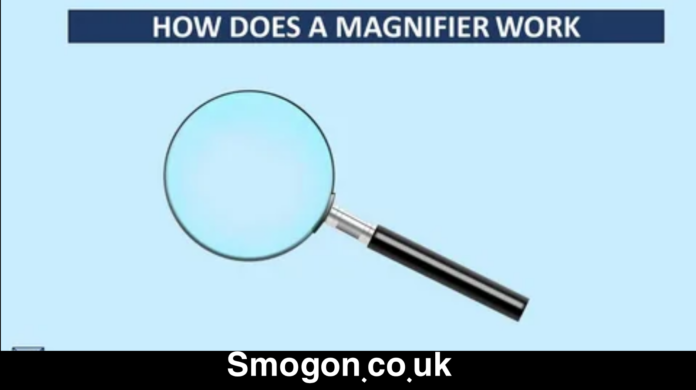
A magnifying glass is a handheld optical device that uses a convex lens to enlarge the appearance of objects. The lens bends light rays in a way that makes nearby items appear larger than they actually are.
The device typically consists of a circular lens mounted in a frame with a handle. When positioned correctly between the eye and an object, the lens produces a magnified image that reveals details not easily visible to the naked eye.
Magnifying glasses vary in size, shape, and magnification strength. Some are designed for casual reading, while others are used for specialised tasks such as scientific observation, jewellery evaluation, and technical inspections.
Despite their simple design, magnifying glasses demonstrate important principles of optics and remain valuable tools in numerous fields.
Why a Magnifying Glass Matters
Understanding what is a magnifying glass used for helps highlight its importance in both everyday life and professional settings.
Human eyesight has limitations. Small text, intricate patterns, and tiny components can be difficult to see clearly. A magnifying glass overcomes these limitations by enlarging visual details without requiring complex technology.
The tool also promotes accessibility. Many individuals with age-related vision changes use magnifying glasses to read books, medication labels, and important documents.
Additionally, magnifying glasses support education by helping students explore scientific concepts and observe details in nature. They make learning more interactive and engaging.
In professional environments, magnifying glasses contribute to accuracy and quality control. Industries such as jewellery, electronics, medicine, and manufacturing rely on magnification to inspect fine details.
Key Features of a Magnifying Glass
Convex Lens Technology
The most important feature of a magnifying glass is its convex lens.
A convex lens curves outward and bends incoming light rays toward a focal point. This bending process creates a larger virtual image when the object is placed within the lens’s focal distance.
The quality of the lens significantly affects image clarity and magnification performance.
Magnification Power
Different magnifying glasses provide different levels of enlargement.
Common magnification levels include:
- 2x magnification
- 3x magnification
- 5x magnification
- 10x magnification
Higher magnification reveals more detail but often reduces the field of view.
Choosing the appropriate magnification depends on the intended task.
Portable Design
One reason magnifying glasses remain popular is their portability.
Unlike microscopes or electronic magnification devices, they require no batteries or external power sources.
This convenience allows users to carry them easily for travel, work, or personal use.
Durable Construction
Modern magnifying glasses are often constructed from:
- Glass lenses
- Acrylic lenses
- Metal frames
- Plastic frames
- Ergonomic handles
Many models are designed for long-term durability and frequent use.
Illuminated Options
Some magnifying glasses include built-in LED lighting.
These illuminated models improve visibility in low-light environments and make reading or inspecting objects easier.
They are particularly useful for older adults and professionals working with fine details.
Ease of Use
A magnifying glass requires minimal training.
Users simply position the lens between their eyes and the object until the desired level of clarity is achieved.
This simplicity makes it accessible to people of all ages.
What Is a Magnifying Glass Used For? Common Applications
Reading Small Print
One of the most common uses of a magnifying glass is reading.
People often use magnification to view:
- Newspapers
- Books
- Maps
- Product labels
- Legal documents
- Medication instructions
This application is especially helpful for individuals with reduced vision.
Scientific Observation
Scientists and students frequently use magnifying glasses to examine specimens.
Examples include:
- Plants
- Insects
- Rocks
- Minerals
- Biological samples
Magnification reveals details that would otherwise remain hidden.
Jewellery Inspection
Jewellers rely heavily on magnification.
A magnifying glass helps assess:
- Gemstone clarity
- Diamond cuts
- Surface imperfections
- Hallmarks
- Fine craftsmanship
Accurate inspection is essential when evaluating valuable items.
Electronics and Technical Work
Electronic components are often extremely small.
Technicians use magnifying glasses to inspect:
- Circuit boards
- Solder joints
- Connectors
- Microchips
- Wiring systems
Magnification improves precision and reduces errors.
Collecting and Hobbies
Collectors frequently use magnifying glasses to examine valuable items such as:
- Coins
- Stamps
- Trading cards
- Antiques
- Historical artefacts
Magnification helps identify authenticity and condition.
Nature Exploration
Magnifying glasses are popular educational tools for exploring nature.
Children and adults use them to observe:
- Leaves
- Flowers
- Tree bark
- Insects
- Soil particles
These observations encourage curiosity and scientific learning.
Benefits of Using a Magnifying Glass
Improved Visual Clarity
The most obvious benefit is enhanced visibility.
Objects appear larger and more detailed, making observation easier.
Increased Accuracy
Professionals often rely on magnification to minimise mistakes.
Better visibility leads to more accurate inspections and evaluations.
Accessibility Support
Magnifying glasses help people with visual impairments maintain independence when reading and performing daily tasks.
Educational Value
Students gain hands-on experience with scientific observation.
Magnification encourages exploration and critical thinking.
Cost-Effective Tool
Compared with advanced optical equipment, magnifying glasses are affordable and widely available.
This makes them accessible to a broad range of users.
How a Magnifying Glass Works
Light Refraction
The science behind magnification involves refraction.
When light passes through the convex lens, it bends inward.
This bending alters how the eye perceives the object.
Formation of a Virtual Image
The lens creates a virtual image that appears larger than the actual object.
Although the object itself does not change size, the eye interprets the enlarged image as magnified.
Importance of Focal Distance
Magnification depends on positioning.
The object must be located within the lens’s focal length to produce an enlarged image.
Moving the lens closer or farther changes the viewing experience.
Human Eye Interaction
The magnifying glass works in partnership with the eye’s natural focusing system.
Together, they enable detailed observation beyond normal visual limits.
Types of Magnifying Glasses
Handheld Magnifying Glasses
The traditional handheld design remains the most common option.
These models are lightweight and versatile.
Stand Magnifiers
Stand magnifiers rest directly on reading material or objects.
They provide stability and hands-free operation.
Illuminated Magnifiers
These models incorporate built-in lighting for enhanced visibility.
Pocket Magnifiers
Pocket-sized versions are ideal for travel and quick inspections.
Professional Magnifiers
Specialised models offer higher magnification levels for scientific, technical, and industrial applications.
Safety Considerations
Although magnifying glasses are generally safe, users should exercise caution.
Avoid Direct Sunlight
A magnifying glass can concentrate sunlight and generate significant heat.
Never leave it in direct sunlight or use it to look directly at the sun.
Proper Storage
Store magnifying glasses in protective cases to prevent scratches and lens damage.
Careful Handling
Clean lenses with suitable materials to maintain image quality and longevity.
FAQs
1. What is a magnifying glass used for most often?
A magnifying glass is most commonly used for reading small print, inspecting objects, and viewing fine details that are difficult to see with the naked eye.
2. How does a magnifying glass make objects appear larger?
It uses a convex lens that bends light rays and creates an enlarged virtual image, making objects appear bigger.
3. Can a magnifying glass help people with poor eyesight?
Yes. Many people use magnifying glasses to read books, labels, and documents when standard text becomes difficult to see.
4. Are magnifying glasses used in science?
Absolutely. Scientists and students use magnifying glasses to study plants, insects, minerals, and other specimens in greater detail.
5. What is the difference between a magnifying glass and a microscope?
A magnifying glass provides lower levels of magnification and is handheld, while a microscope offers much higher magnification for detailed scientific observation.
Conclusion
Understanding what is a magnifying glass used for reveals just how versatile this simple optical tool can be. From reading small print and inspecting jewellery to exploring nature and supporting scientific research, magnifying glasses continue to play an important role in everyday life and professional work.
Their affordability, portability, and ease of use make them accessible to people of all ages. Even in an age of advanced digital technology, the traditional magnifying glass remains a practical and reliable solution for seeing the world in greater detail.