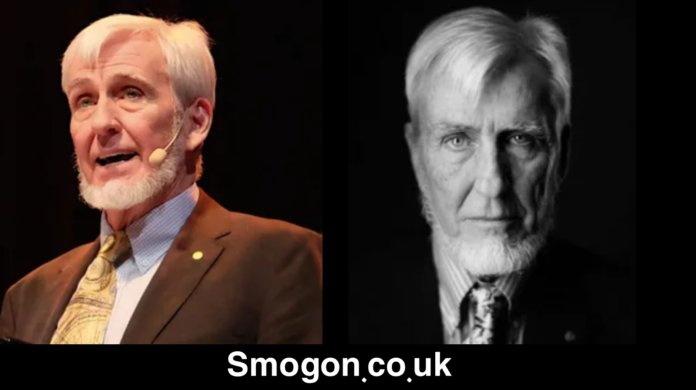


Professor John O’Keefe is one of the most influential neuroscientists of the modern era. Best known for discovering “place cells” in the brain, his groundbreaking research transformed scientists’ understanding of how humans and animals navigate their surroundings. His work laid the foundation for decades of research into spatial memory, cognition, and neurological disorders.
The contributions of Professor John O’Keefe extend far beyond academic laboratories. His discoveries have helped researchers better understand how the brain creates internal maps of the world, ultimately earning him the Nobel Prize in Physiology or Medicine. Today, his research continues to influence neuroscience, psychology, medicine, and artificial intelligence.
Quick Facts About Professor John O’Keefe
| Fact | Details |
|---|---|
| Full Name | John O’Keefe |
| Profession | Neuroscientist |
| Nationality | American-British |
| Field | Neuroscience |
| Known For | Discovery of Place Cells |
| Major Award | Nobel Prize in Physiology or Medicine (2014) |
| Institution | University College London (UCL) |
| Research Focus | Spatial Memory and Brain Navigation |
| Key Contribution | Cognitive Mapping Theory |
| Impact | Revolutionised understanding of memory and navigation |
What Is Professor John O’Keefe?
Professor John O’Keefe is a renowned neuroscientist whose research fundamentally changed how scientists understand the brain’s navigation system. Born in New York City in 1939, O’Keefe later became a leading researcher at University College London, where he conducted much of his pioneering work.
His most famous discovery occurred in 1971 when he identified specialised neurons within the hippocampus known as place cells. These cells activate when an animal occupies a specific location within its environment. This finding suggested that the brain constructs an internal representation—or map—of physical space.
Prior to O’Keefe’s work, scientists had limited understanding of how the brain processed spatial information. His research provided the first clear evidence that specific neural mechanisms enable navigation and memory formation.
As a result, Professor John O’Keefe became a central figure in cognitive neuroscience, influencing generations of researchers studying memory, learning, and brain function.
Why Professor John O’Keefe Matters
The importance of Professor John O’Keefe’s work cannot be overstated. Navigation is a fundamental ability that humans and animals rely on every day. Understanding how the brain performs this task helps scientists address broader questions about cognition and behaviour.
His discovery of place cells provided crucial insight into the relationship between memory and spatial awareness. The hippocampus, where place cells are located, is also heavily involved in memory formation. Consequently, O’Keefe’s findings revealed important connections between navigation and memory systems.
Furthermore, his research has practical implications for understanding neurological conditions such as Alzheimer’s disease. Patients with Alzheimer’s often experience difficulties with navigation and memory, making O’Keefe’s work highly relevant to medical research.
In addition, his discoveries have influenced fields beyond neuroscience, including robotics, artificial intelligence, psychology, and computer science.
Key Features of Professor John O’Keefe’s Contributions
Discovery of Place Cells
The discovery of place cells remains Professor John O’Keefe’s most celebrated achievement.
While studying rats moving through controlled environments, O’Keefe observed that certain neurons fired only when the animal occupied specific locations. Different cells responded to different places.
This groundbreaking observation suggested that the brain creates an internal map of the surrounding environment.
The discovery challenged existing theories and opened entirely new areas of scientific investigation.
Development of Cognitive Map Theory
Building on his place cell research, O’Keefe developed the cognitive map theory.
According to this theory, the brain constructs mental maps that allow individuals to navigate complex environments.
Rather than relying solely on simple behavioural responses, the brain actively creates representations of space that support planning and decision-making.
Today, cognitive map theory remains a cornerstone of spatial neuroscience.
Research on the Hippocampus
Much of O’Keefe’s work focused on the hippocampus, a brain region critical for learning and memory.
Before his research, scientists knew the hippocampus played an important role in memory, but its precise functions remained unclear.
His findings demonstrated that the hippocampus also serves as a navigation centre, integrating spatial information to guide behaviour.
This dual role continues to be a major area of neuroscientific research.
Nobel Prize Recognition
In 2014, Professor John O’Keefe received the Nobel Prize in Physiology or Medicine.
He shared the award with husband-and-wife researchers Edvard Moser and May-Britt Moser, who later discovered grid cells—another crucial component of the brain’s navigation system.
The Nobel Committee recognised their collective work for revealing the neural mechanisms that allow organisms to orient themselves in space.
This honour cemented O’Keefe’s place among the most influential scientists of his generation.
Influence on Modern Neuroscience
Few discoveries have had as broad an impact as O’Keefe’s identification of place cells.
His work inspired thousands of scientific studies exploring:
- Memory systems
- Learning processes
- Neural networks
- Cognitive function
- Brain disorders
Today, place cells remain one of the most extensively studied topics in neuroscience.
Contribution to Interdisciplinary Research
Professor John O’Keefe’s discoveries have influenced numerous scientific disciplines.
Researchers in robotics use principles derived from place cell studies to improve navigation algorithms.
Artificial intelligence systems increasingly incorporate concepts inspired by biological navigation mechanisms.
This interdisciplinary influence demonstrates the far-reaching significance of his work.
Benefits and Real-World Applications of O’Keefe’s Research
Understanding Alzheimer’s Disease
One major application of O’Keefe’s work involves Alzheimer’s research.
Many patients experience disorientation and difficulty navigating familiar environments.
Studying place cells and hippocampal function helps researchers investigate why these symptoms occur.
Advancing Memory Research
Because navigation and memory are closely linked, O’Keefe’s findings have advanced broader understanding of memory formation and retrieval.
Scientists continue exploring how spatial memory systems interact with other cognitive functions.
Improving Artificial Intelligence
AI researchers frequently look to biology for inspiration.
The brain’s navigation systems provide valuable models for designing intelligent machines capable of autonomous movement and decision-making.
Supporting Robotics Development
Modern robots increasingly rely on mapping and localisation technologies that resemble biological navigation systems.
Insights from place cell research have contributed to these advancements.
Enhancing Cognitive Science
O’Keefe’s discoveries have enriched our understanding of human thought processes.
Researchers studying perception, decision-making, and learning continue drawing upon concepts established through his work.
The Discovery of Place Cells: A Scientific Breakthrough
The Scientific Environment of the 1970s
During the early 1970s, neuroscience was rapidly evolving.
Technological improvements allowed researchers to record activity from individual neurons with unprecedented precision.
This environment enabled O’Keefe to conduct experiments that would ultimately transform the field.
Observing Neural Activity
By monitoring neuronal firing patterns in freely moving rats, O’Keefe identified cells that consistently activated in particular locations.
This observation suggested that spatial information was represented directly within the brain.
Publishing Revolutionary Findings
The publication of his findings generated significant interest among neuroscientists.
Researchers began investigating whether similar mechanisms existed in humans and other animals.
Subsequent studies repeatedly confirmed and expanded upon O’Keefe’s original discoveries.
Building a New Scientific Framework
Over time, place cells became central components of broader theories explaining navigation and memory.
This framework ultimately led to the discovery of additional specialised cells involved in spatial processing.
Professor John O’Keefe’s Legacy
Transforming Neuroscience
O’Keefe’s work fundamentally altered scientific understanding of the brain.
His discoveries established entirely new research directions that continue to generate important findings.
Inspiring Future Scientists
Thousands of neuroscientists have built upon O’Keefe’s contributions.
His research serves as a model of curiosity-driven scientific exploration.
Educational Impact
University courses worldwide teach place cells and cognitive mapping as essential concepts in neuroscience.
Students continue learning from theories and discoveries he pioneered decades ago.
Lasting Relevance
Despite advances in technology and methodology, O’Keefe’s original findings remain highly relevant.
Modern neuroscience continues validating and expanding upon his groundbreaking ideas.
FAQs
1. Who is Professor John O’Keefe?
Professor John O’Keefe is an American-British neuroscientist best known for discovering place cells in the hippocampus and winning the Nobel Prize in Physiology or Medicine in 2014.
2. What are place cells?
Place cells are specialised neurons that activate when an individual or animal occupies a specific location within an environment, helping create internal spatial maps.
3. Why did John O’Keefe win the Nobel Prize?
He received the Nobel Prize for discovering neural mechanisms involved in spatial navigation, particularly place cells within the hippocampus.
4. How does O’Keefe’s research help medical science?
His findings contribute to understanding memory disorders and neurological diseases such as Alzheimer’s disease, which often affect navigation abilities.
5. Where did Professor John O’Keefe conduct most of his research?
Much of his groundbreaking research was conducted at University College London, where he became a leading figure in neuroscience.
Conclusion
Professor John O’Keefe stands among the most influential neuroscientists in modern history. His discovery of place cells revolutionised understanding of how the brain navigates space and forms memories, opening entirely new avenues of scientific research.
From advancing neuroscience and medicine to inspiring innovations in artificial intelligence and robotics, his contributions continue to shape multiple fields. Decades after his original discoveries, researchers worldwide still build upon the foundation he established.
As our understanding of the brain continues to evolve, Professor John O’Keefe’s work remains a remarkable example of how a single scientific breakthrough can transform the way humanity understands itself.